What If Gordon Banks Had Played, Part 4
7th June 1974
It was only four hours since Harold Wilson had announced the date of the General Election, and Conservative Central Office buzzed with activity. Upstairs, at the back of the building, Lord Thorneycroft, Chairman of the Party, sat back in his office and listened carefully to the two Special Branch officers sat before him. “So, what exactly is this threat?”
“Well,” began the first officer. “The group refer to themselves as the 'Angry Brigade' and are apparently an anarchist organisation, opposed to capitalism and to the EEC. They have been active for around four years, mainly at a very low level. The first attack was on Duncan Sandys' house in 1969, they then seemed to fade away for a long period of time. They emerged again during the the passage of the European Communities Act. So far their targets have been the police, areas they perceive as being 'high class' such as Kensington and Chelsea, expensive clothes boutiques and so on, and people associated with British entry into the EEC.”
“The last one shouldn't bother us at least,” Thorneycroft smiled.
“Over the past four years they have been involved with two car bombs, one on the home of a senior police officer, an attack upon a foreign embassy building, a letter bomb sent to a Member of Parliament and numerous death threats, generally passed on through letters to the media. Last week the Times received a letter that seemed to imply a threat to attack Conservative Party property during the election campaign.”
“Property? You mean...”
“Our intelligence would lead us to expect attacks upon constituency offices, mainly in the London area where the groups seems to operate. Obviously our officers will be available to offer extra protection to members of the shadow cabinet, and we can increase police patrols around Conservative Party offices but there is a limit to what we can do.” The officer paused and Thorneycroft nodded thoughtfully. “I should also add that until now we have had an agreement with the media not to publicise this groups activities, to deny them the publicity they are obviously seeking. We would prefer that arrangement to continue, certainly through the election campaign.”
“Yes, yes. I quite understand.”
From “The Voting Surveyed” by Professor Richard Rose, in The Times Guide to the House of Commons 1974 (Times Newspapers, 1974)
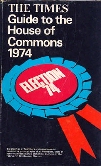
Considering huge lead in the opinion polls enjoyed by the Conservative Party when the election was called, it is perhaps surprising that the Conservative majority was not greater than 44. However, the Conservative victory seems to have been based more on a desire by the British public to rid themselves of Mr Wilson's Labour government than a positive endorsement of Mr Powell's Conservatives; undeniably the biggest winners in the 1974 election have been the smaller parties.
The basis of the Conservative Party's vote changed considerably from that in 1970. In many middle class seats the Conservative vote actually fell, seen by many as a reaction to Mr Powell's rhetoric on immigration, and this fall in support benefited the Liberals and the nationalist parties in Scotland and Wales. The Liberals recorded their highest number of MPs since 1935, returning 21 MPs to Westminster, while the SNP and Plaid Cymru returned ten and three MPs respectively. In sharp contrast inner-city working class areas, especially those with a relatively high percentage of ethnic voters, saw huge swings to the Conservatives, most obviously in East Warley, the successor seat to Smethwick, which was won by the Conservative Party.
The election also saw unusual contests in the twenty-three seats being defended by those Labour and Conservative MPs who lost or resigned their respective party whips over the formation of the short-lived National Coalition. The Labour Party did not put up candidates against sitting National Conservative MPs, and apart from the two seats where candidates stood as unofficial Labour candidates the 12 seats became straight fights between Conservative and National Conservative candidates. The result was that, with local Labour voters backing the National candidate and local Conservatives often split between their sitting MP and the new Conservative candidates, ten of the National candidates were returned, the exceptions being Mr Hugh Dykes and Mr Quintin Hogg. The split in the Conservative Party also affected other seats. Although only a handful of National Conservative candidates stood in other seats, and even then had only marginal effects on the voting, many Conservative activists backed the National Government and failed to campaign for the Party — a development that can only have harmed the Conservative vote.
The eleven Labour MPs who had lost the whip were, while not officially endorsed by the Labour party, not opposed by official Labour candidates and in effect there were normal elections in these seats, although in four seats independent candidates stood as “Labour Loyalists”. These candidates had little effect, apart from in Bethnal Green & Bow, where a split in the Labour vote lead to the Conservative Party coming within 300 votes of ousting Mr Ian Mikardo. In the end all 11 Labour rebels were re-elected.
From the Times, Saturday 6th July 1974

Prime Minister Enoch Powell appointed his new cabinet today. There were few surprises with William Whitelaw, Angus Maude and Keith Joseph all retaining the portfolios they held in opposition. Several prominent members of the last Conservative shadow cabinet did not find positions within the new cabinet: Lord Carrington has been replaced by Julian Amery as Secretary of State for Defence; Anthony Barber, the former shadow leader of the house and shadow chancellor under Edward Heath, has left the front bench, James Prior becomes Leader of the House of Commons; the former shadow secretary of state for Scotland, Gordon Campbell, lost his seat at the election and Edward Taylor, the MP for Glasgow Cathcart, becomes Secretary of State for Scotland. Other MPs entering the cabinet for the first time include James Molyneaux, who becomes Secretary of State for Northern Ireland, Patrick Jenkin at Industry and Nicholas Ridley at Energy.
The Queen's Speech will be delivered on Tuesday, and is expected to contain measures to reform rent control, reform trade union law, to privatise British Leyland and British Aerospace, repeal Labour's Community Land Act and abolish the prices and incomes board. Two major pieces of legislation that are almost certain to be included are the repeal of the European Communities Act and a tough new Immigration Bill, intended to ban primary immigration and offer cash grants for voluntary repatriation. The new Chancellor, Mr Joseph, has already announced an increase in interest rates in an attempt to halt rising inflation. The Government has also arranged immediate talks with union leaders in order to bring an end to strike action. It is understood that a compromise deal has already been floated and strike action is likely to be brought to a halt within the next few days. Union leaders are reported to be willing to give the new Government a chance, although some observers believe that they are wary of a stronger Government with a public mandate and do not want to risk provoking the new Conservative Government while it is still enjoying a honeymoon with the voters.
Meanwhile, the leader of the Labour Party, Harold Wilson, has announced his intention to step down as the Leader of the Opposition and to leave the House of Commons. This means that a Labour Party already shaken by defeat and internal dispute will be forced into a possibly divisive leadership election. Tony Benn and Roy Jenkins have already announced their intention to stand as leader. They are expected to be joined as candidates by James Callaghan, Michael Foot, Dennis Healey and possibly Tony Crosland. Mr Wilson will remain as leader of the Party until his successor is chosen.
Mr Wilson's announcement that he will also step down as an MP will also result in a by-election in his Liverpool constituency. This may provide an opportunity for one of the Labour Minister's defeated at the General Election to return to Parliament. Possible by-election candidates include Norman Buchan, Dr David Owen, Gwyneth Dunwoody, John Diamond and Shirley Williams.
From “The Labour Party Leadership Election 1974” by K.Alderman (Parliamentary Affairs, Vol.27, Issue.4)
Jim Callaghan, who had been a favourite to secure the leadership, ruled himself out almost immediately as being too old for the role of Leader of the Opposition. He will be sixty-six by the time the next election comes, and friends say he was worried that he would be unable to give the job the energy it required. Callaghan instead offered his support to Tony Crosland, who had been seen as a fringe candidate by many MPs.
Of the five remaining candidates Michael Foot and Tony Benn were both faced with an immediate disadvantage due to the continuing suspension of the Party whip from the eleven Independent Labour MPs, all of whom could have been expected to back either Foot or Benn. Benn unsuccessfully argued throughout the contest that the eleven should have the whip reinstated and be allowed to participate in the ballot. After the first ballot the results were Foot 74, Healey 64, Jenkins 58, Benn 24, Crosland 20. As a result Crosland was eliminated and Benn stepped down from the contest in favour of Michael Foot.
Tony Crosland had been a minor candidate from the start, and it was perhaps only the backing of Jim Callaghan that persuaded him to stand. It is unlikely that he expected to win and his candidature was a more a place-marker to ensure an important role in the new shadow cabinet. Benn, on the other hand, conducted a serious campaign from the outset, but his hopes were fatally wounded by the suspension of eleven probable backers and his association with the MPs who had brought down the last Labour Government.
In the second ballot Foot picked up the majority of the votes from the two eliminated candidates. It seems likely that all of Benn's supporters backed Foot, while Crosland's supporters divided up between the three remaining candidate. The final results of the second ballot were Foot 106, Healey 74, Jenkins 60.
The third ballot was widely predicted to be a walkover for Healey; few commentators saw Foot gathering much support from MPs who had until now backed Roy Jenkins. In the event Jenkins' backers divided five to one between Healey and Foot, giving Healey a victory of 124 to Foot's 116. While the majority of the party acted to heal the wounds of the contest, Tony Benn conspicuously pointed out that had the eleven Independent Labour MPs been allowed to vote Foot would have won. Benn and Foot's chagrin was presumably only increased by Healey's immediate announcement that, in the interests of Party unity, the eleven rebels would be immediately invited back into the party. The subsequent shadow cabinet elections however would provide some succour for the left, as an overwhelmingly left wing slate dominated Healey's first shadow cabinet.
From the Daily Mail, 4th October 1974
The Labour and Conservative Parties both held their respective seats in the by-elections held last night. In the Ashford by-election, caused by the resignation of Mr William Deedes, Mr Fergus Montgomery was returned for the Conservative Party with a majority of 9,212. In the Huyton by-election, caused by the resignation of Mr Harold Wilson, Mrs Shirley Williams was returned with a majority of 11,398.
From “Modern British History 1945-1997” by Norman Howe (MacMillan 1998)
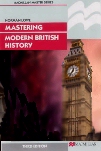
The second half of 1974 saw an extended honeymoon for Powell's government. The Labour opposition was convulsed with internal infighting, as the militant wing of the party attempted to push the party's policy towards the left in the wake of what was seen as an unfair leadership election by many on the left of the party, the lack of opposition allowed the Conservatives to push through contentious legislation. The first budget contained cuts in income tax, corporation tax and capital gains tax, funded by cuts in spending on defence and social security and a pay freeze for public service workers, and the predicted receipts from privatisation. The budget also saw the abolition of VAT in favour of an old style purchase tax, and the beginning of the gradual relaxation of credit controls.
The second half of 1974 also saw the Government repeal the European Communities Act, a move which was widely welcomed by much of the general public, and introduce the Industrial Relations Bill — which abolished many of the rights of trade unions, banned the closed shop and withdrew benefits from the families of striking workers.
The Christmas period saw buoyant consumer spending, much of it financed by credit and the new Government entered 1975 on a high. However, trouble was ahead. The NUT had been on strike since the Autumn of 1974 in protest over the freeze on public service pay. This had received little support from the rest of the union movement aside from two one day stoppages by the NUM in December of 1974. With the threat of the Industrial Relations Bill however the Unions began to unite against the Conservative Government. A huge rally was held in January 1975 opposing the second reading of the Bill, and Union leaders indicated they would be willing to lead their members out on strike over the Bill. The Conservative Government was undeterred and Secretary of State for Energy quietly began the stockpiling of coal and oil reserves.
30th January 1975
Patrick Jenkin, Secretary of State for Industry, nodded to the cameras outside as he left Thursday morning's cabinet. It had been a difficult meeting; the unemployment figures for the month were going to be awful and he was bound to face fire in the house tomorrow over the Government's refusal to bail out another clothing factory that had just gone bust. It was beginning to become a tired joke, the fortnightly trip to the House of Commons to answer the same questions from the Labour front bench with the same answers about refusing to prop up lame duck industries. Jim Prior and Willie Whitelaw were beginning to wobble; neither had said it outright, but it was clear there were unspoken concerns around the cabinet table.
Downing Street was lined with ministerial limousines and Jenkin mumbled a greeting to his chauffeur as he eased into the back seat. He had to attend some godforsaken Tyneside electronics factory later this afternoon, but needed to return home first to change first. Pulling out of Downing Street he looked up out of the car window to see the rows of police vans parked either side of Whitelaw and the distant throng of banners and the noise of whistles, yells and loudspeakers from the demonstration against the Industrial Relations Bill. Jenkin shook his head as he unlocked his ministerial box and settled down to read. He barely looked up again until the car reached Woodford.
Turning into his road there were sirens again, Jenkin looked up, fearing the worst. He could do without protesters outside the house. However, there were no protesters, though Patrick Jenkin would later wish it had been the case. Instead two police cars and two fire engines were parked are the foot of the drive, beyond them fireman hosed down his blackened and smouldering home. Jenkin was shocked into silence for a second. He stared dumbfounded from the car window, thanking God the children had been at school, before climbing from the car and clambering over the crime scene sticky tape to ask the police what on earth had happened.
Letter received by the Daily Express, 31st January 1975

Communique 5
Patrick Jenkin got it yesterday. We're getting closer.
We are no mercenaries.
We attack property not people.
Jenkin was totally unimportant... he was just a symbol... we could have killed the bastard... or Powell or Joseph... or any pig.
Our Power is the 3 Conservative Offices petrol bombed on June 13, the Altrincham generator which was blown out are all answers of the Revolutionary movement to our call.
Fascists and government agents are the only ones who attack the public -- the fire-bombing of the West Indian party in South London, the West End cinema bomb.
British democracy is based on more blood, terror, and exploitation than any empire in history.
Has a brutal police force whose crimes against people the media will not report.
Now its government has declared vicious class war.
Jenkin's Industrial Relations Bill aims to make it a one-sided war.
We have started to fight back and the war will be won by the organised working class, with bombs.
Communique 5
The Angry Brigade