Esperanto Music History
In-depth histories of Esperanto music groups and albums by Thomas Preece
Litovaj Popolaj Kantoj kaj Dancoj
The earliest vinyl LP in Esperanto is usually reckoned to be the 1964 release Ni Kantu en Esperanto. It is the first LP mentioned in the Laŭjara katalogo de muzikaj diskoj en Esperanto and the Esperanto Wikipedia’s list of Esperanto music albums, among other sources. Because of its status as the very first, I chose it as the subject of my first article on this site - although I have recently had to correct my description of it as “the first LP” to “the first 12-inch LP”, as it turns out that there was an earlier 10-inch Esperanto LP: Litovaj Popolaj Kantoj kaj Dancoj, released in 1961.
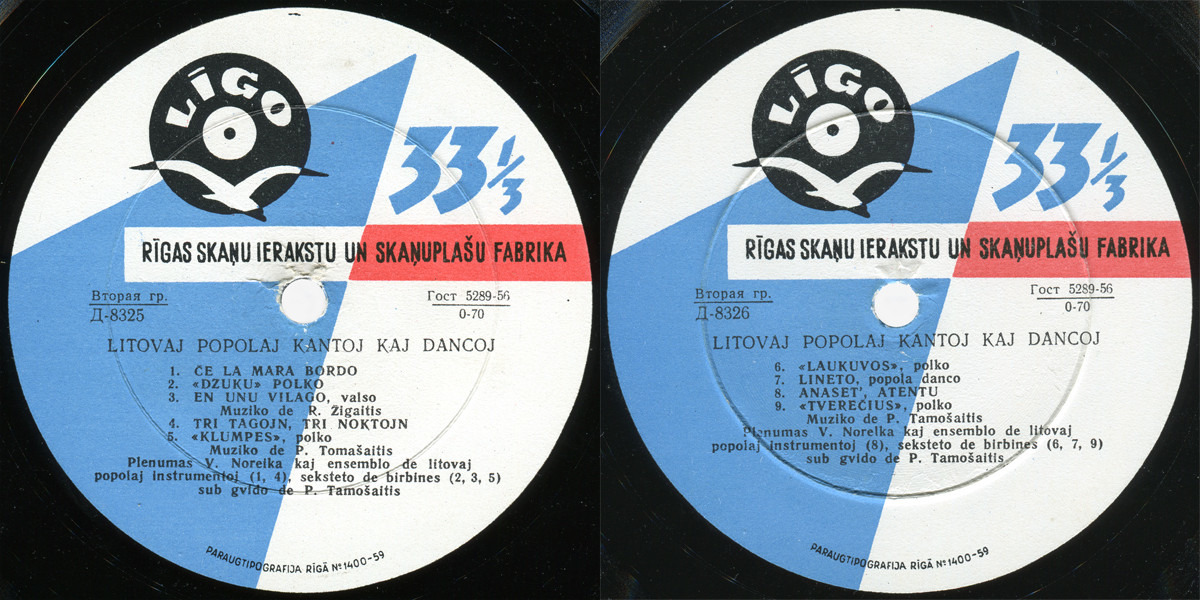
The 10-inch LP was a short-lived variation of the more common 12-inch LP. When the long-playing record was first introduced by the American firm Columbia in 1948, it was manufactured in both sizes, corresponding to the two sizes of shellac 78s that had been on the market for several decades. Generally speaking, popular and jazz 78s were 10 inches (playing for about three minutes per side), and more serious classical recordings were 12 inches - a size that was generally considered to be bordering on unwieldy but that had the advantage of playing for five minutes per side, significantly reducing the number of times the listener would have to change the record in the middle of a longer classical work. Columbia’s original intention was that the same genre distinction would apply to LPs, although as it was discovered in practice that vinyl records were significantly lighter and less fragile than shellac, 12-inch records now seemed more practical, and their longer playing time (roughly 20 minutes per side compared to a 10-inch LP’s 15 minutes) was a significant selling point for popular and jazz music as well. 10-inch LPs therefore largely fell out of use by the late 1950s, at least in the West. I was initially slightly surprised to find one from as late as 1961, but it turns out that the Soviet state labels actually kept pressing 10-inch LPs right up until the end of the vinyl era.

This particular record, Litovaj Popolaj Kantoj kaj Dancoj, was the brainchild of Vytautas Šilas, an engineer born in 1937 in Šiauliai, the fourth-largest city in Lithuania. Šilas learned Esperanto in 1956, and quickly became active in what was at that time an underground or even illegal Esperanto community in the Soviet Union. He founded the still-active Vilnius youth Esperanto club (“Juneco”) in 1961, arranged several Esperanto events, and by 1969 was involved in the leadership of the Sovetia Esperantista Junulara Movado - the unofficial and illegal Esperanto youth organization of the entire USSR. Šilas was also editor of a number of Esperanto periodicals - the illegal Kio, Kie, Kiam (1973-1974) and Kurte (1976-1979), and the legal Litova Stelo (from 2006).
Writing in 2018, Šilas recalled a conversation with the director of the Vilnius recording studios that took place in 1961, in which he proposed the idea of producing a record in Esperanto. The director was unsure whether “Moscow would approve” of such a project, but Šilas was aware of the local Esperanto speaker Leonas Noreika and that his son, Virgilijus Noreika, was one of the most popular Lithuanian opera singers of the day. They both agreed that Noreika’s singing was “appreciated and liked even in Moscow”, and so it was decided to recruit him for the project in the hope of gaining official approval.
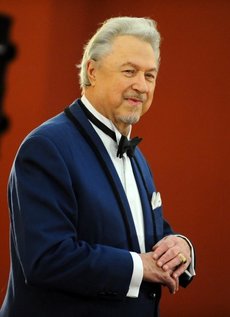
Rather than approaching Virgilijus Noreika directly, Šilas first spoke to his father Leonas about the project, who assured him that he would be able to convince his son to take part. Šilas then visited Virgilijus Noreika at his home to show him the songs he had translated, and together they selected three to include on the record. Noreika also asked if one of his favourite songs, Pasvarstyk, Antela, not among the songs that Šilas had already translated, could also be included, and so in total four songs were recorded. However, Noreika was unhappy with one of his performances, and only three were included on the final record: Ant Marių Krantelio (Ĉe la Mara Bordo in Esperanto), Tris Dienas, Tris Naktis (Tri Tagojn, Tri Noktojn) and the aforementioned Pasvarstyk, Antela, (Anaset’, Atentu). Noreika, on hearing his singing played back, remarked that “Esperanto sounds great - like Italian”!
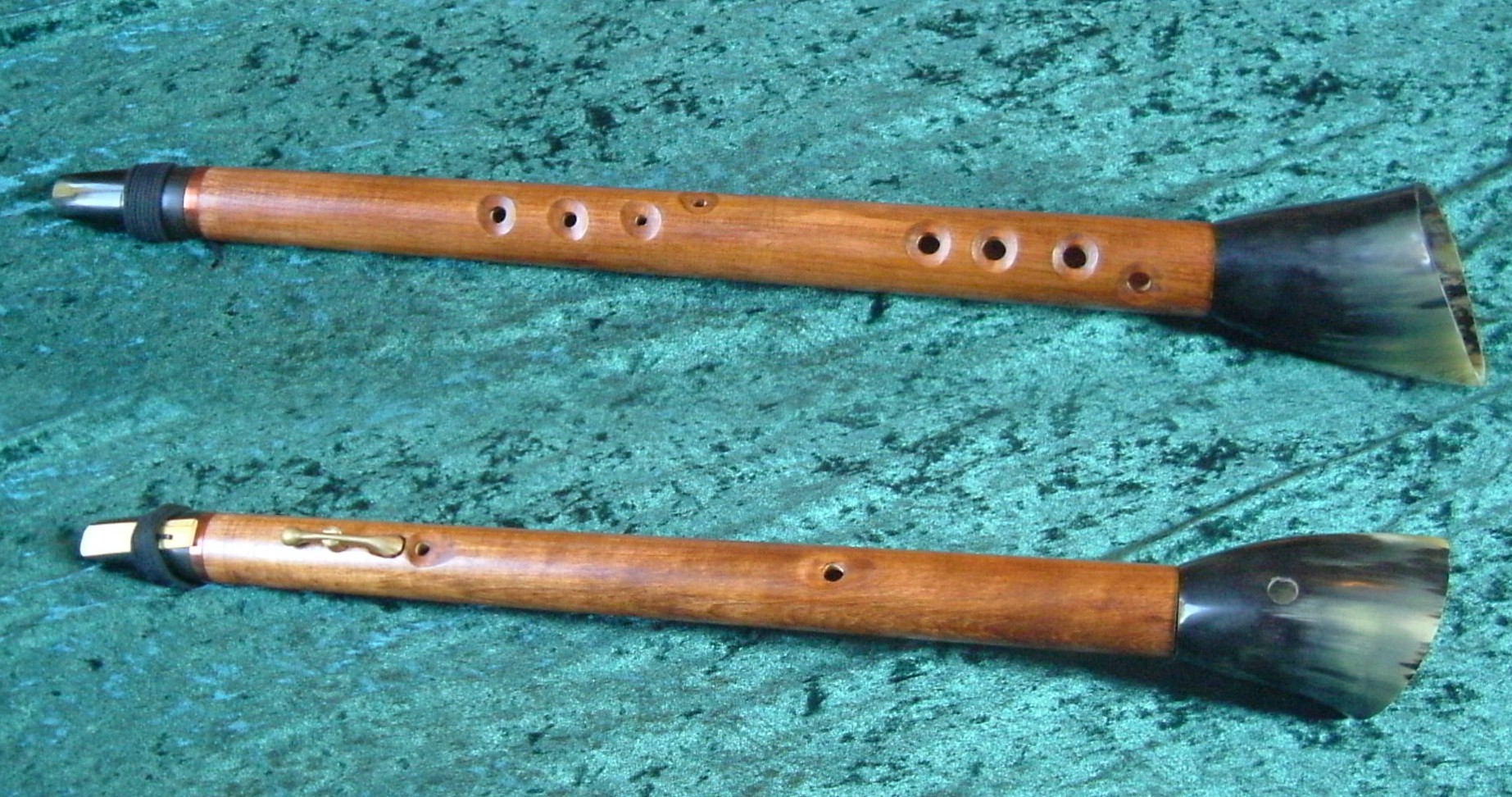
Noreika’s singing was accompanied by Ansamblis Sutartinė, a professional chamber ensemble of Lithuanian folk instruments. The album was completed with six instrumental pieces performed by a birbynė sextet - a Lithuanian folk instrument that, according to Wikipedia, “can be either single or double-reeded and may or may not have a mouthpiece”. The modern birbynė is a more standardised instrument with a single reed, a body typically made from maple and a cow horn bell, and produces a surprisingly rich and gentle sound - almost sounding more like a flute than a reed instrument.
The record was released in December 1961 by the Latvian state label Līgo and was repressed in 1964 by Melodija - the same firm, albeit renamed in the interim to use a transliterated version of the same brand as its parent company, the USSR’s main state label Мелодия. These two editions both had Esperanto labels, and the record was also released by Мелодия with Russian labels and by the USSR’s export label Mezhdunarodnaya Kniga with English labels. In both cases, the song titles are given in the same language as the rest of the label, with a note “sung in Esperanto” underneath. None of the editions of this album had a picture sleeve - all were released in the label’s generic paper sleeves, and so they are illustrated here using the labels rather than the covers.

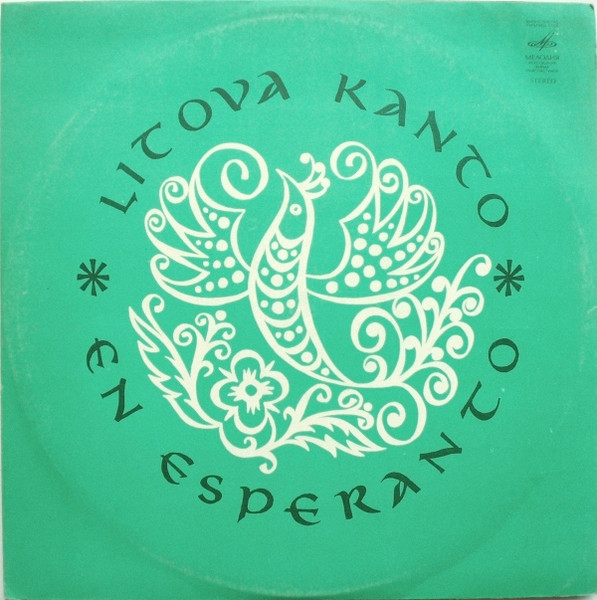
A decade later, Šilas’s song translations were used on a second Esperanto record: Litova Kanto en Esperanto. This was a 12-inch LP, released in 1972, with a dozen songs “by Lithuanian Soviet composers”. The songs were some of the biggest Lithuanian pop songs of the period, translated by Šilas and other members of the Juneco club, and performed in Esperanto by the original artists. I believe that the recordings are re-sings to the original backing tracks - or if not, they are at least the same arrangements and musicians.
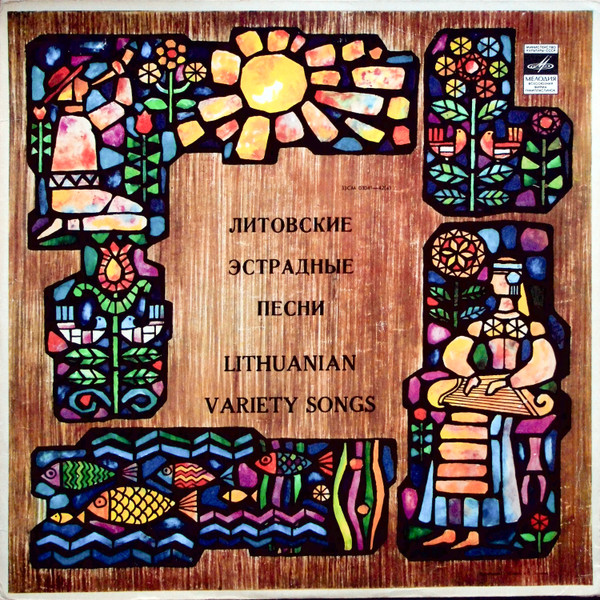
By 1972, all of the USSR’s state record labels had merged into Мелодия, and so the record was issued on that label. The record was issued under two different titles: Litova Kanto en Esperanto, with the green cover, was pressed in Latvia by the same factory as the previous record and had liner notes in Lithuanian, Russian and Esperanto; whereas Литовские Эстрадые Песни / Lithuanian Variety Songs, with liner notes in Russian and English, was pressed in Moscow by one of Мелодия’s main record-pressing plants. The album was also re-issued as a CD in 2005.
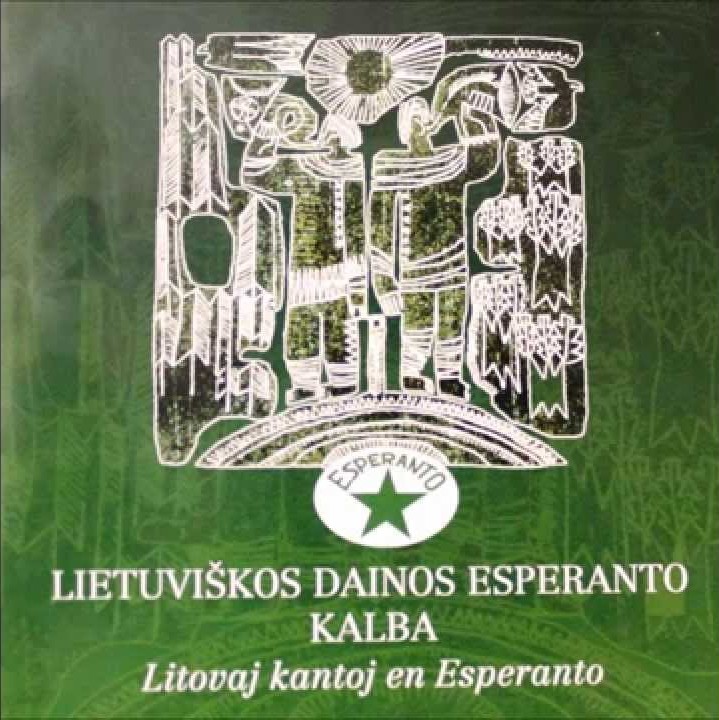
Šilas also published his song translations in book form: Juneco Kantas in 1967, Ni Kantu en Esperanto (not to be confused with the record of the same name!) in 1971 or 1972 and Litovaj Popolkantoj in 2005. Some of his translations were also later used on the CD Lietuviškos Dainos Esperanto Kalba / Litovaj Kantoj en Esperanto (not to be confused with the aforementioned Litova Kanto en Esperanto!) by Romualdas Vešiota and Augustas Kubilius.
Discography
Sources and Further Reading
Acknowledgements
Thank you to my friend Eglė for helping me identify the three folk songs and for general advice on Lithuanian culture. Coincidentally, although Eglė doesn’t speak Esperanto, she told me that she had in fact recently performed music in the language - she sings in a local choir that was engaged to perform several songs at a Lithunian Esperanto event in 2025, including La Espero and the song Tri Tagojn, Tri Noktojn featured on the 1961 record.
Comments
Contact
Copyright © 2025 Thomas Preece