Esperanto Music History
In-depth histories of Esperanto music groups and albums by Thomas Preece
Internacia Kantaro
In last month’s post, I considered the question of what was the first song in Esperanto. Today I want to expand on early Esperanto musical culture, before recordings were common, and to look at printed Esperanto music, using the 1920s Internacia Kantaro as an example.
In the modern world, music is undoubtably a larger part of our daily experience than at any previous time in history, but the way in which we experience it has completely changed in the last hundred years or so. These days, the word “music” generally implies recorded music - and perhaps more specifically recorded popular music - that we listen to somewhat passively and in many cases individually and privately. For many people, their active participation in making music is limited to singing along with their favourite recordings. “Music” is something that professionals create using mysterious processes in an anonymous and far-off studio, that we then listen to at our own convenience, often using it as background sound rather than actively listening with our full attention.
This constrasts significantly with how people experienced music for most of human history, up until the widespread introduction of records in the first half of the 20th century. Music could only be experienced live - either in a concert setting, or by making it yourself. As such, learning to play musical instruments was very common, as was continuing to play them as an adult, and just about everyone sang. Especially by the start of the 20th century, popular songs were widely sold as sheet music, similarly to how they would later be sold as records. Singing was most often a communal experience - at home as a family or a small group of friends, or in larger settings with bigger groups: even just one pianist could accompany a whole hall full of singers.
These days, communal participatory singing as a common activity has all but died out, and mostly takes place in the crowds at sporting events and in religious services. While amateur choirs do exist, they tend to be angled towards music as performance rather than participation: while the rehearsals may be enjoyable, they are still intended as preparation for entertaining an audience, rather than just singing purely for the group’s own enjoyment.
Even the idea that being a “musician” is primarily a profession or a career is a very modern one, mostly driven by the recording industry. While professional musicians have always existed, they were very much a minority: most people who thought of themselves as musicians approached it solely as a hobby or a leisure activity. The idea of learning music with the primary goal of becoming famous or making money from it would’ve been a very strange concept up until the middle of the 20th century. The view was that we sing and make music not as a profession but simply because that’s what humans do and a way that we express ourselves.
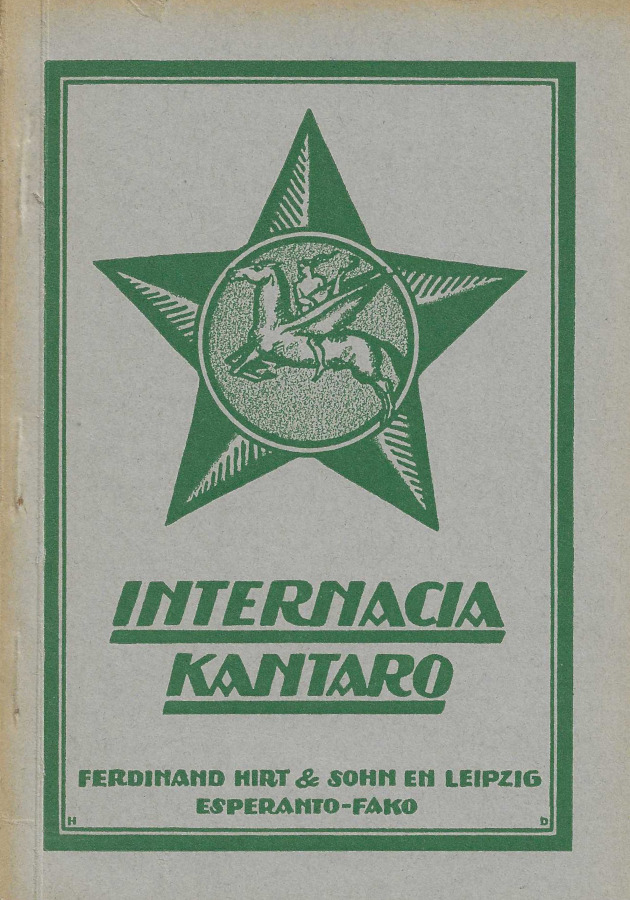
It’s in the context of communal singing as a regular activity, therefore, that we find the Internacia Kantaro. By its third and final edition in 1930, edited by Paul Bennemann, it consisted of 139 translated folk songs from 55 nations, five specifically Esperanto songs, a handful of short rounds and greeting songs, and three concert arias. This was the culmination of over two decades of work, beginning with the Esperantista Kantaro in 1907, a much more modest collection of 50 German folk and student songs edited by L E Meier. A second edition followed in 1913, edited by W Fries, which contained three original Esperanto songs, 32 German songs and 18 songs from 13 other countries. It was at this stage that Bennemann became involved in the project; he was responsible for the corresponding sheet music, and afterwards became editor of the entire collection. Bennemann’s first edition, and the first under the title Internacia Kantaro, was published in 1922.
Paul Bennemann (1885-1954) learned Esperanto in his mid-twenties. His most notable Esperanto publications, aside from the Internacia Kantaro, include Esperanto-German and German-Esperanto dictionaries (considered the standard for nearly 30 years), a translation of the play Gyges und sein Ring by Friedrich Hebbel, a reading book for learners entitled Tra la Mondo, and the Psikologia Terminaro. He also contributed to the Enciklopedio de Esperanto and various journals and magazines, and was a member of the Lingva Komitato.
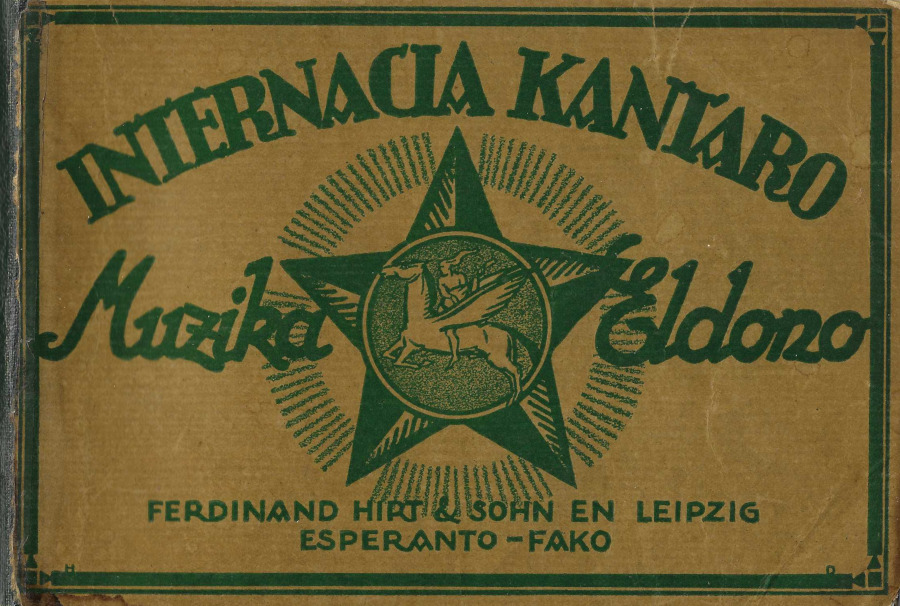
My collection includes a copy of the Internacia Kantaro lyrics book and a clearly well-used copy of the Muzika Eldono, containing mostly piano arrangements of all the songs. The lyrics book describes itself as as being from the “16th-20th thousand”. The idea that anything in Esperanto could sell in tens of thousands seems almost unbelievable these days, but it reflects the way that this particular book was used: before the introduction of projectors to display song lyrics on a screen, everybody in a group would need their own copy of the words if they wanted to join in the singing. Whereas the members of a local Esperanto group might only buy one or two copies of a novel between them, the group would need to buy multiple copies of whichever song book they wanted to use - and as the Internacia Kantaro was the most popular Esperanto song book, it sold in large volumes to many local Esperanto groups in multiple countries.
The focus on folk songs is very typical of Esperanto music of the period. There are perhaps several reasons for this, both practical and philosophical. Firstly, folk songs are invariably easy to sing. They are by definition the songs of the people, originally sung regularly in daily life by a broad spectrum of the population and not by trained singers. The melodies are therefore easy to teach and to remember, making them suitable for communal singing. This approach is hinted at indirectly in the book’s introduction, describing how the three operatic arias were included as suitable material for “concert singers” to perform at Esperanto conferences or events. If these three pieces are specially for trained singers, then by implication the rest of the collection is for everyone to sing.
Folk songs are also easy to publish in large collections. As they are not restricted by copyright, no royalties need to be paid, and clearly translating a large number of songs is a much quicker and simpler process than composing a similar number of brand new songs. Bennemann described his translation process in the book’s introduction, noting that where the original was in a language that he didn’t speak, he worked from a “precise prose” translation into Esperanto by a fluent speaker of that language, with his work limited to adapting the Esperanto text to rhyme and fit the melody. This is essentially the same process that was later used to adapt Team’s Slovak lyrics into their Esperanto versions.
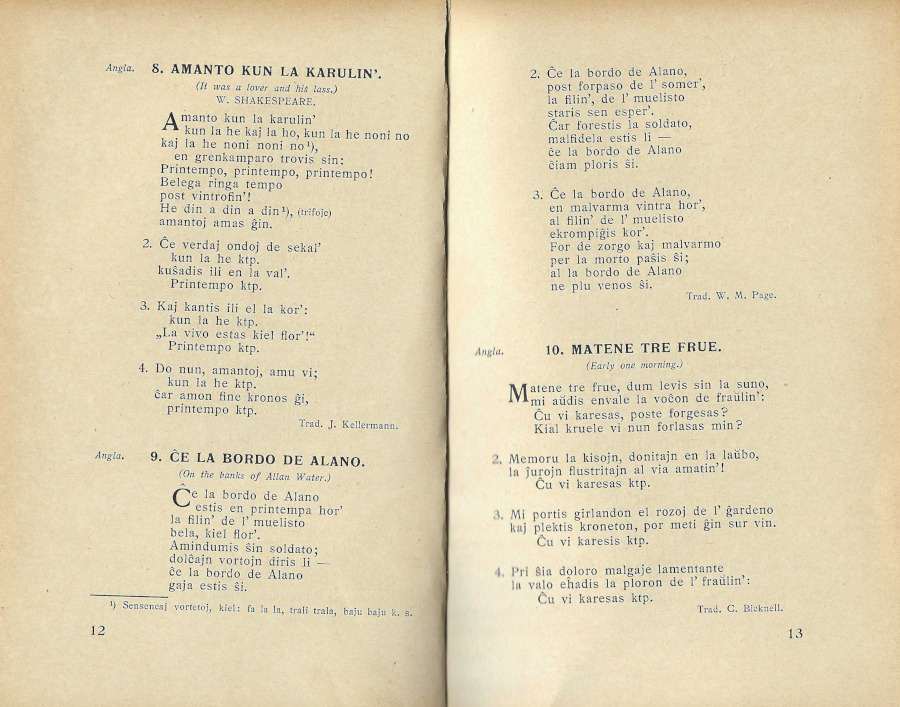
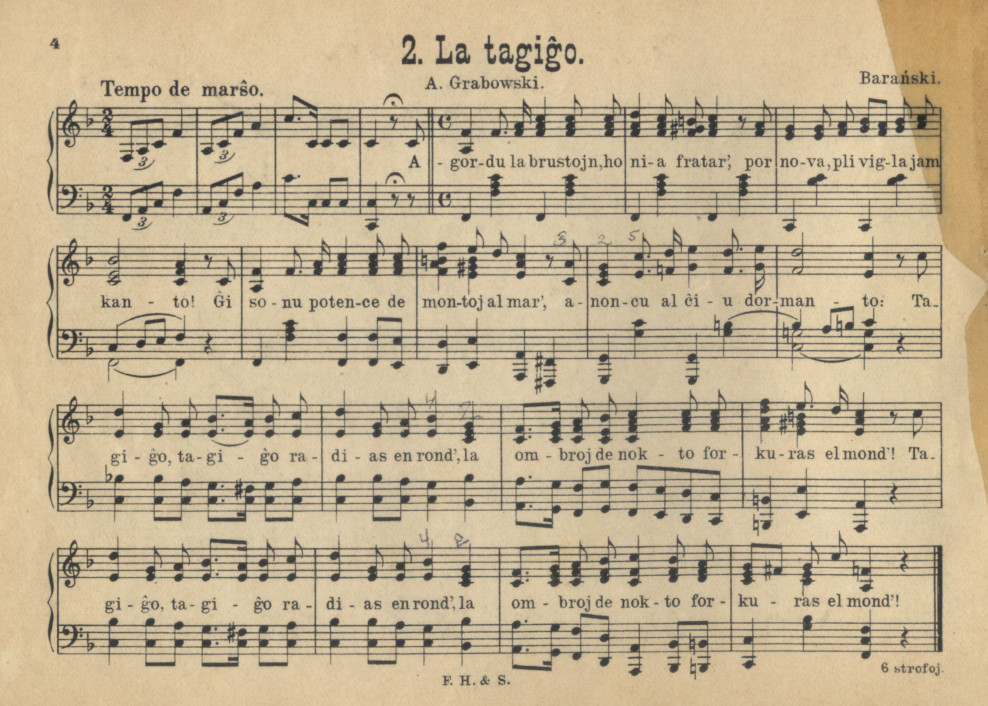
From a philosophical perspective, the early Esperanto movement broadly subscribed to the idea that Esperanto was primarily a bridge between cultures, rather than something that should have a significant culture of its own. The attitude was therefore that Esperanto speakers would want to learn the traditions of other countries and to share their own traditions with others. When original songs were composed, they tended to be about Esperanto itself: the five songs with original Esperanto texts in the Internacia Kantaro (La Espero, La Tagiĝo, Al la Esperantistaro, La Fluanta Tajdo and La Verda Stelo) are all directly or indirectly about Esperanto or the Esperanto movement.
To my knowledge, the earliest fully original Esperanto song not about Esperanto itself is Lulkanto by Vilma Eichholz and Frans Jahger, which appeared on the 1964 LP Ni Kantu en Esperanto. Even as late as 1981, the inclusion of two “originally written songs” on Olivier Tzaut’s album Karnavaleto was specifically mentioned on the cover; the remainder of the album consists entirely of translated folk songs. It is really only with the beginning of the Esperanto rock music movement later in the 1980s that original songs on topics other than Esperanto itself became the norm.
Reaction to the Internacia Kantaro seems to have been universally positive. A review of the 1922 edition in Belga Esperantisto praised the expansion of the collection to include more non-German songs, and stated that “almost every group should own and use a copy of this most interesting publication”. In 1929, the same journal described how “there is no need to praise this excellent book”, as “the best argument in its favour is the fact that it had to be republished”, noting that it was used by “many Esperanto groups”.

Although there are no recordings of songs specifically taken from the Internacia Kantaro, some of the songs on Ni Kantu en Esperanto and on Londono Kantas by the Londona Esperanto-Ĥoro use the same translations. The latter album is a good example of the style of music and communal singing that would’ve been common when the Internacia Kantaro was published - the main difference being that the choir is accompanied by accordion and other instruments, as opposed to the piano accompaniment that would’ve been more common in the 1920s.
Sources
Comments
Contact
Copyright © 2025 Thomas Preece