Esperanto Music History
In-depth histories of Esperanto music groups and albums by Thomas Preece
Frank Merrick
Frank Merrick (1886 - 1981) was an English 20th-century pianist and composer. Alongside his musical activities, Merrick was also a pacifist, vegetarian, a prominent supporter of women’s suffrage and an active member of the RSPCA. As much has been written about his life and musical career elsewhere, this article will, as usual for this blog, concentrate on his Esperanto activity.
Merrick learned Esperanto during his imprisonment as a conscientious objector during the First World War, at the suggestion of the prison chaplain. He was “overwhelmed by the skill and beauty of the language, as also by the driving force which inspired Zamenhof to create it”. His articles “Esperanto for Musicians”, published in the London Symphony Observer in 1950 and 1951, and “Esperanto in Relation to Choral Singing” in The Music Review in 1954, explain his thoughts on the language and its use in music, and his piece on “La Brita Muziko” in the magazine Esperanto in 1952 provides a basic introduction to British classical music for Esperanto speakers.
In 1944, Merrick published the Muzika Terminaro with fellow Brit Montagu C Butler. This booklet defined a wide range of words relating to music, proposing new words for concepts lacking in the existing Esperanto vocabulary. The Terminaro was an important work in its day, and is still an excellent quick reference, especially for words relating to western classical music, although unfortunately not all of their terminology has survived the test of time unscathed - most notably their proposal of piĉo for musical pitch. While Butler and Merrick were likely not aware of the usage of that word as a profanity (it was coined by Kálmán Kalocsay in his Sekretaj Sonetoj in 1932, but probably not yet in widespread use in the 1940s), it is nonetheless defined in Bertilo Wennergren’s Rokmuzika Terminaro as “TO BE AVOIDED” in capital letters.
Merrick’s main Esperanto musical work was his collection of songs, all settings of Esperanto poems, composed “in or near the 1950s”, several of which were recorded with the singer Sybil Michelow and released on an LP in 1965.
While I assume that these songs must have been published somewhere in sheet music form, as one reviewer of the record mentions having sung the songs himself prior to the release of the LP, copies of them are rather difficult to find. One of the songs, Vintro, a setting of a poem by Kalocsay, was published in the magazine Norda Prismo in 1955, and so it seems reasonable to assume that others were also published in Esperanto magazines. While UEA’s Libroservo does stock a wide variety of old second-hand magazines, more research would be needed to determine which issues of which titles are worth purchasing.
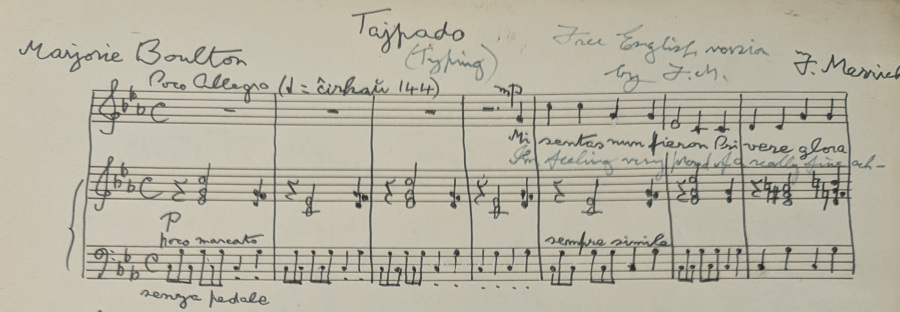
Manuscripts of the songs are, however, deposited at the archives of the University of Bristol, alongside many other papers and material relating to Merrick and his career, and can be consulted there by any researcher at no charge. I understand that this is a complete collection of Merrick’s Esperanto music - about 30 songs in total, with texts by Zamenhof, Lucien Thévenin, Marjorie Boulton, G D Nash and Kálmán Kalocsay. The majority of the songs are scored for a single voice, mostly with piano accompaniment, and some have singable English translations of the lyrics alongside the Esperanto. As well as these songs are two settings of psalms: Psalm 23 (“The Lord is my shepherd”) for unaccompanied SATB chorus, and Psalm 104 for chorus with two oboes, two horns and bass trombone.
Merrick’s recorded output in Esperanto consists of one side of one LP, Esperanto Songs and Unaccompanied Choral Works, released in 1965 by the Frank Merrick Society (cat no FMS 17). The following songs are included, all sung by the mezzo-soprano Sybil Michelow and accompanied by Merrick himself at the piano:
- La Nigra Rajdanto (Kálmán Kalocsay)
- Pluvo (L L Zamenhof)
- Neĝo (Marjorie Boulton)
- Memnon (Marjorie Boulton)
- Tajpado (Marjorie Boulton)
- La Hirundoj (Lucien Thévenin)
- Tagomezo (Lucien Thévenin)
- Oktobro (Lucien Thévenin)
These songs are followed by Merrick’s setting of Psalm 23, performed by The London International Choir. Side B is an unrelated choral work in English.
This record is incredibly rare - apparently Merrick’s recordings were primarily intended for his own personal use and for his family and friends, and were typically pressed in quantities of less than one hundred. As such, I’ve not actually been able to source a copy of the record (although I was able to consult the liner notes at the archive, and I have a copy of the lyric booklet, which I received in a package of various Esperanto records that I bought from a local second-hand record shop), and it is therefore on my list of particularly wanted recordings.
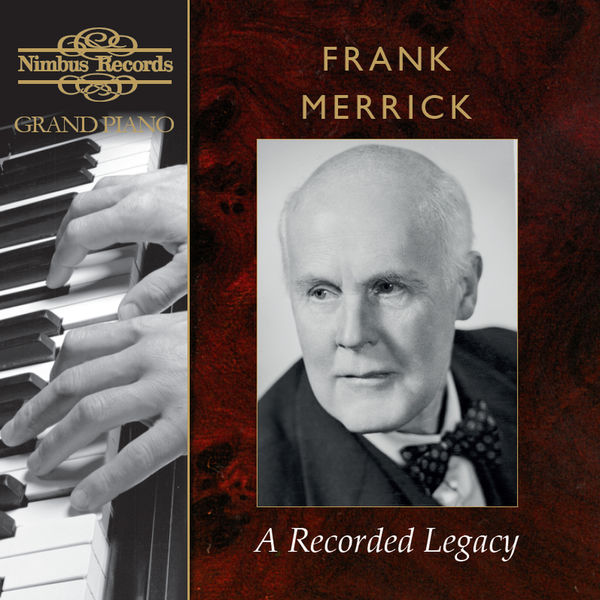
Five of the songs can be heard on a 2018 CD box set by Nimbus Records, Frank Merrick: A Recorded Legacy: numbers 3 (Neĝo), 4 (Memnon), 6 (La Hirundoj), 7 (Tagomezo) and 8 (Oktobro). These appear to have been transferred not from a master tape but from vinyl, and although the label has done a good job of restoring the audio and cleaning it up for a CD release, some obvious vinyl imperfections are still audible, particularly during Tagomezo. As the release is a 6-disc box set, I assume that the reason for only including five of the songs wasn’t simply due to a lack of space - most likely the transferred audio of the remaning three songs and of the setting of Psalm 23 wasn’t able to be brought up to a suitable quality.
While A Recorded Legacy is available on YouTube and most streaming services, unfortunately the track tagged as the Esperanto songs is actually an instrumental performance of a different piece, and so the only way to hear the songs is to purchase the entire box set. The label has assured me that they are working on re-uploading a corrected version, but this will apparently take some time. I will update this post once the songs become available online.
Update - 10th December 2025
Merrick also recorded some of his Esperanto songs in English translation, with the singer Stella Wright, which were issued on an LP by the label Rare Recorded Editions. The six songs on side A are all Merrick’s, and are presumably the translations that appear in the manuscripts.
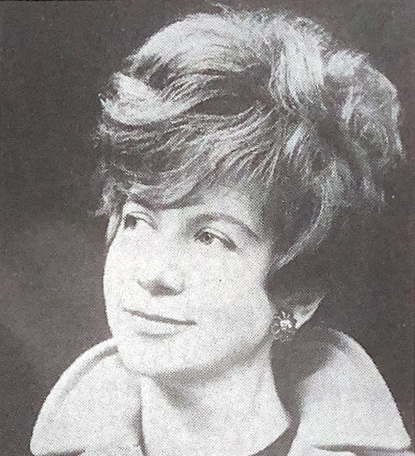
Merrick and Michelow also peformed his songs in concerts, most notably at the 1971 Universala Kongreso in London. The second evening of the conference was a concert given at the Royal Festival Hall entitled Brita Vespero, and featured six of Merrick’s songs: Pluvo, Neĝo, La Hirundoj, Tagomezo, Tajpado and Oktobro. Other performers on the same evening included William Auld (“Poetry of Scotland”), the Welsh Male-Voice Choir of London and Margaret Hill, who performed six British and Irish folk songs in Esperanto translation.
In his liner notes for the LP, Merrick mentions that “the number of serious musical settings of Esperanto words seems pretty small even if this is partly due to the difficulty of spreading them”, adding that he had only learned about three songs by the Danish composer Victor E Bendix (1851-1926) that very year (1965). Merrick states that “the purpose of all these settings, including that of the 23rd Psalm, is very close to that of Zamenhof”, although sadly doesn’t elaborate any further on what he means by that. The record was supplied with a small booklet containing the lyrics of all of the songs, both in the original Esperanto and in an English translation by Merrick - in this case a literal translation, rather than the singable translations on his manuscripts.
A brief description of the record was the lead article in the February 1966 edition of The British Esperantist, followed by a more substantial review by Bernard Cavanagh in the November edition of the same year. Cavanagh began by outlining his frustration that so many existing Esperanto songs were merely translations, and how he doubted “whether a song of high quality can ever be adequately translated”. He then described each of the songs on the record in some detail, and his opinion of them was extremely positive.
From a 21st-century perspective, it is all too easy to think of original Esperanto songs as something quite normal - after all, most Esperanto music released in the last 40 years or so has been original. But in the 1960s, songs with original Esperanto lyrics were incredibly rare, and the majority of those that did exist were about Esperanto itself or the Esperanto Movmennt. It’s therefore unsurprising that Bernard Cavanagh would describe Merrick’s songs as “a new and important branch of our Esperanto cultural heritage”.
Esperanto Discography
Sources and Further Reading
- The Pacifist, March 1966
- Norda Prismo, July-August 1955
- Revuo Esperanto, June 1952 - “La Brita Muziko”
- London Symphony Observer, December 1950 - “Esperanto for Musicians - I”
- London Symphony Observer, January 1951 - “Esperanto for Musicians - II”
- The Music Review, Vol IV No 2 - “Esperanto in Relation to Choral Singing”
Comments
Contact
Copyright © 2025 Thomas Preece