Food Forest: Taking Gardening From Occasional Chore to Obsession
2025-02-05
I have tried to write this post several times but I keep getting overwhelmed and tossing it out. My plan originally was to post a series of updates showing how our yard has transformed over time but I just haven't had the time to keep up with getting all that information and photography together in posts for the gemlog. You see I have planted so many things since this all started that I don't think I even remember everything I've put in the ground. So many plants.
Some Background
Over the last 9-12 months I've gone from admiring plants mostly from a distance to a full on plant geek. I didn't think I was looking for a new hobby but got one anyway. The more I learn, read and think about it though, it is more like a component of a healthy lifestyle than a hobby. Although, I do enjoy it quite a lot like I would a hobby. It all started when we cleared some overgrowth and dead trees from the rear of our yard and had a nice patio installed. We decided that it might be nice to have a little privacy from the house across the alley if we were going to be spending more time on our new patio. Solving this problem with landscaping seemed like a more aesthetically pleasing and less expensive solution than putting in a privacy fence. So I built some trellises along the alley and planted some vining native plants and some native bushes in between to get a wall of green started.
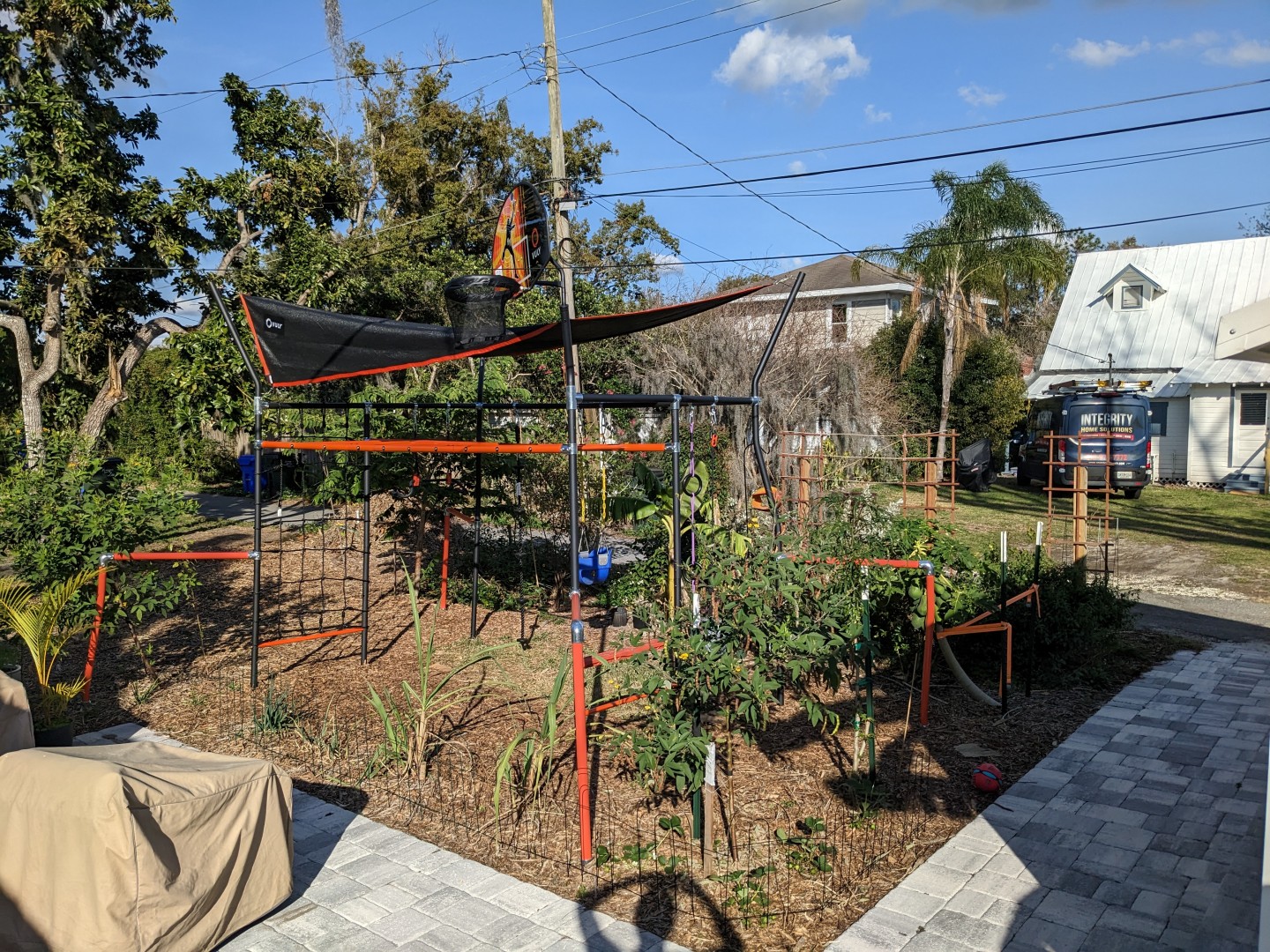
I won't go into too much detail but the innocent little privacy landscaping project somehow launched me into a project to replace all the grass in our back yard with native and edible plants, converting it into a mini food forest. In some cases the double whammy of native edible plants, score! At this point the back yard only has one tiny little rectangle of grass left just waiting for me to find a little bit more cardboard to finish covering it up. We put up a new monkey bar/jungle gym in the center of the yard as a Christmas present for the kids. We joke that it is a true jungle gym because with all the plants we've put in it is nestled in between everything and feels like you're in a jungle. My hope is that in a year or two when some of the trees have matured a little that we'll be able to swing around the jungle gym and grab various berries and leaves to snack on as we play.
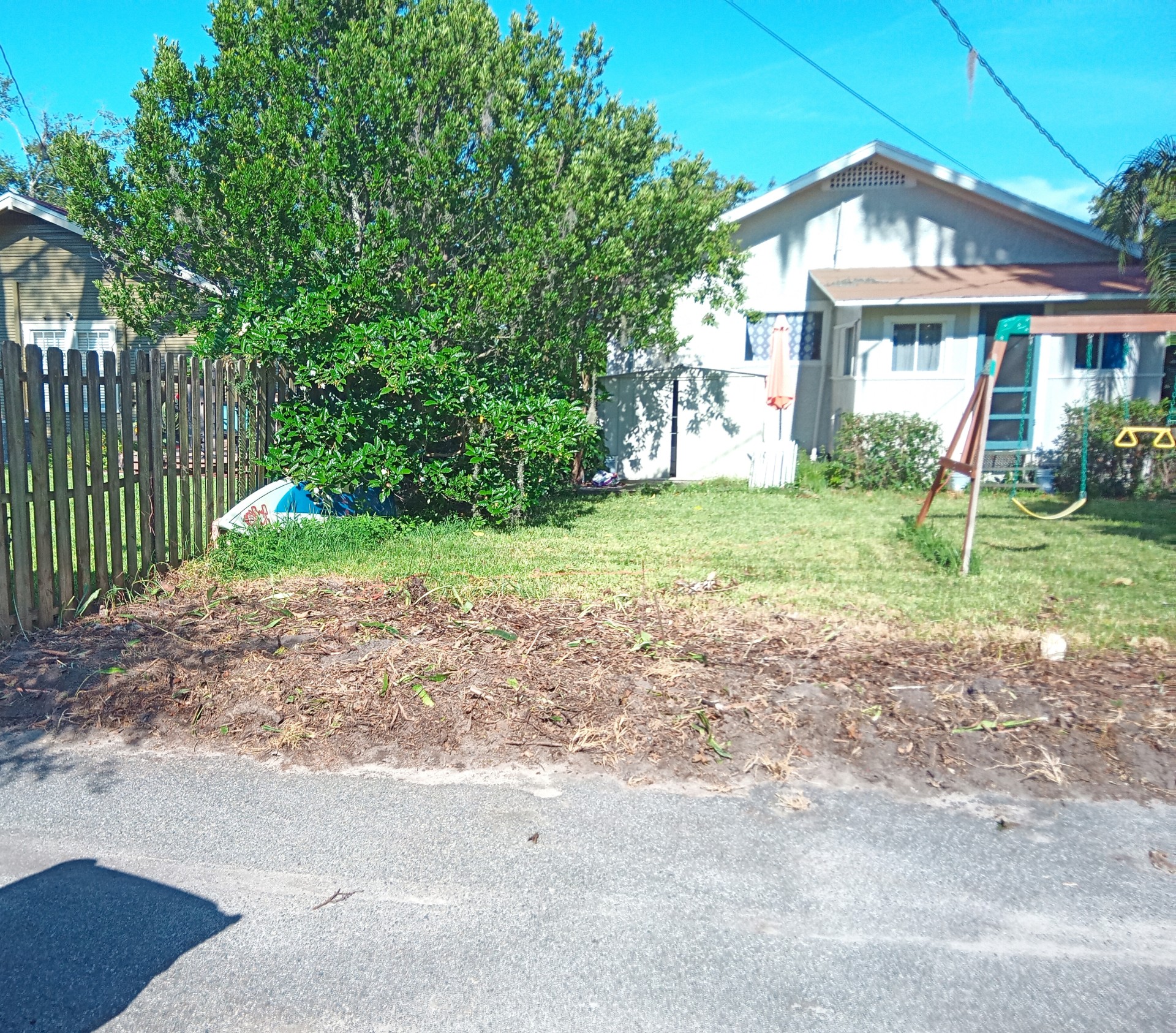
I couldn't find a photo from when we first moved in but there was a big nasty overgrown weedy mess and some dead trees blocking most of the access to the alley behind the house. This first photo is from right after we cleared all the stuff along the alley. As you can see the yard was an extremely boring square of grass with some sad bushes and a weed tree that got way too big. The second photo is the current state of the back yard as of yesterday.
The Plants
Originally I had wanted to keep a running list of everything we have growing in the yard but I'm so far past keeping track of it now that's out the window. So I think I'll just talk about some of the things I've planted recently that I'm excited about.
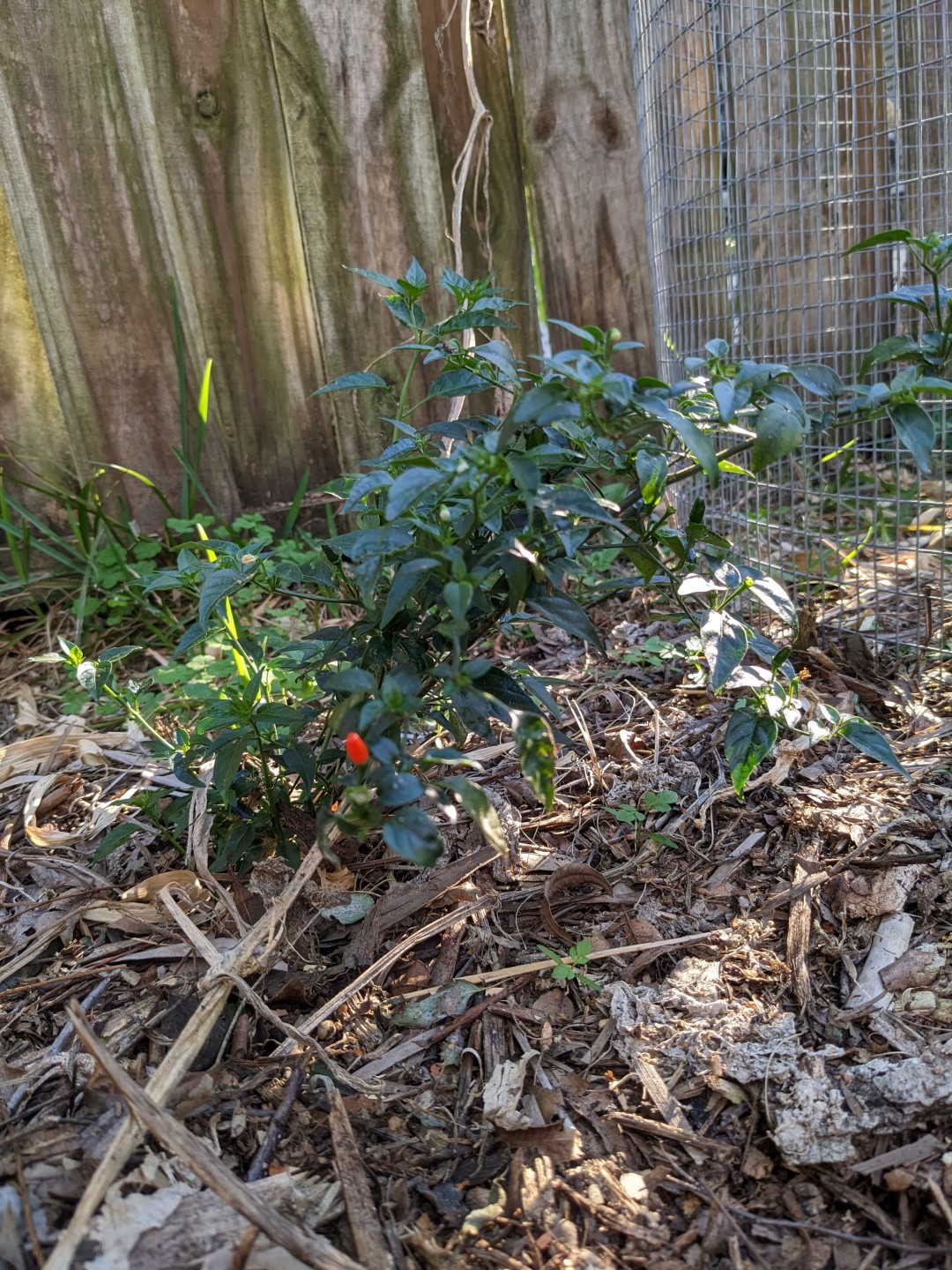
- Bird Pepper (Capsicum annuum var. glabriusculum)
This is a great little plant that is native to my area that produces very small but very abundant and spicy peppers. Bird Pepper is an accurate name because birds and particularly Mockingbirds love to eat the little peppers. The peppers are very small; only about 1/4 to 1/2 inch long. What they lack in size they make up for in quantity. One plant of approximately 2ft x 3ft will have literally hundreds of peppers on it and in my climate it will produce peppers year round. It is a short-lived perennial that seems to die out after only about 2 years. However, I'm finding out now that it is pretty good at re-seeding itself and also propogates very easily from cuttings. I have been collecting and drying the ripe peppers for the last 6 months or so and I threw a bunch of them in the food processor to make my own red pepper flakes.
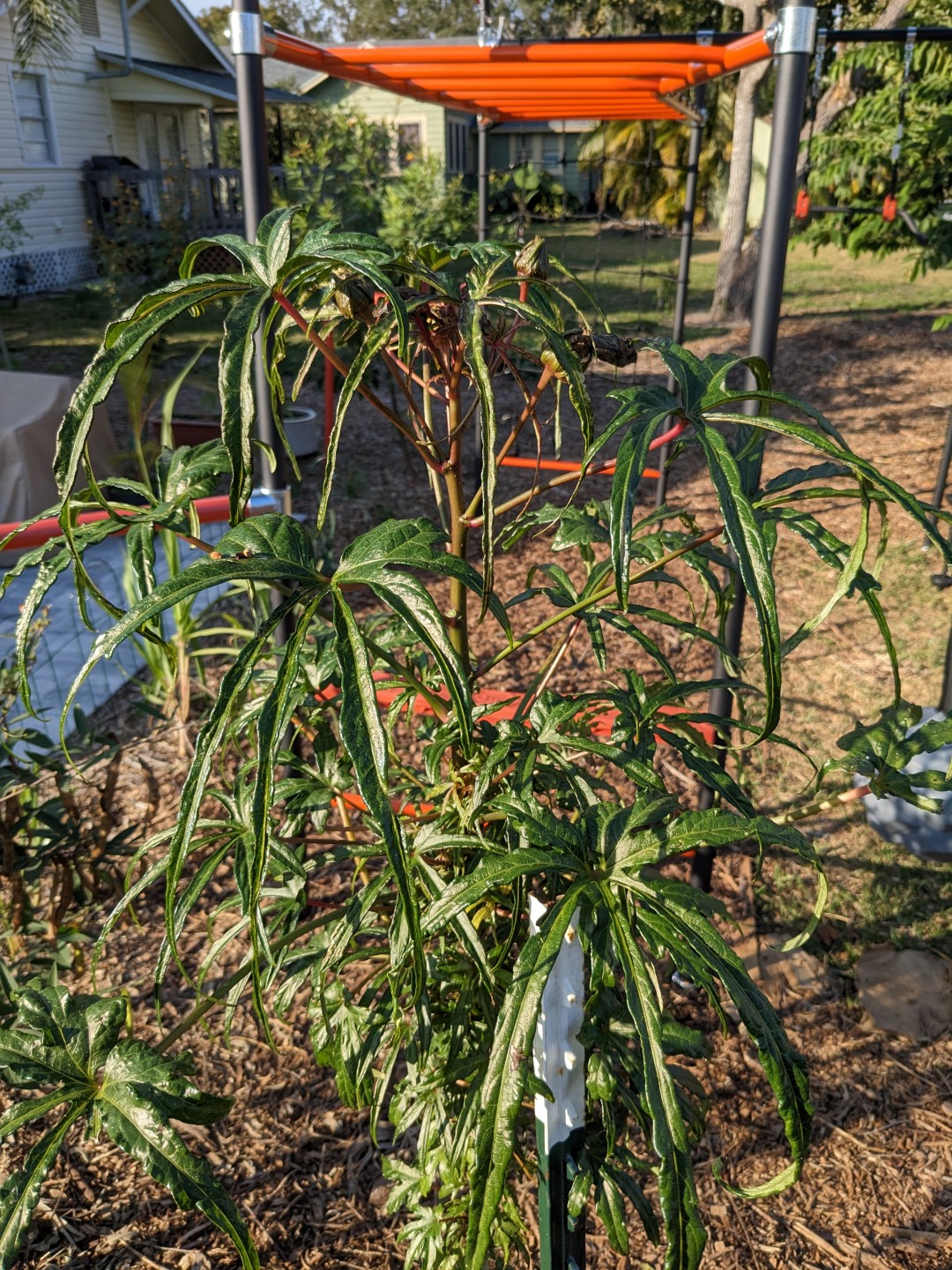
- Aibika, Salad Tree (Abelmoschus manihot)
This is an excellent perennial green if you live somewhere tropical/subtropical that traditional salad greens won't grow well. It's called salad tree for a reason. You can just pick leaves right off of it and make a salad any time you want. It seems to do well with very little care where I live and will grow for many years producing salad greens that have a pleasant mild lettuce flavor. Together with some other perennial greens we're growing we have been able to make salads pretty much any time we want. We call them yard salads.
- Soursop, Guanabana (Annona muricata)
Needs no introduction to anyone living in a tropical region. Possibly my favorite fruit on planet earth. The fruit is very tasty on its own and it makes one of the most delicious beverages I've ever had. Soooooo good. It is related to the Pawpaw that is native to North America. I live in a subtropical area that gets a bit colder than it would like but it can grow here in the right spot. A frost is extremely rare in this area and the microclimate where my house is makes that even more rare than the wider area so I'm hopeful the seedlings I've gotten started will make it and produce fruit in a few years.
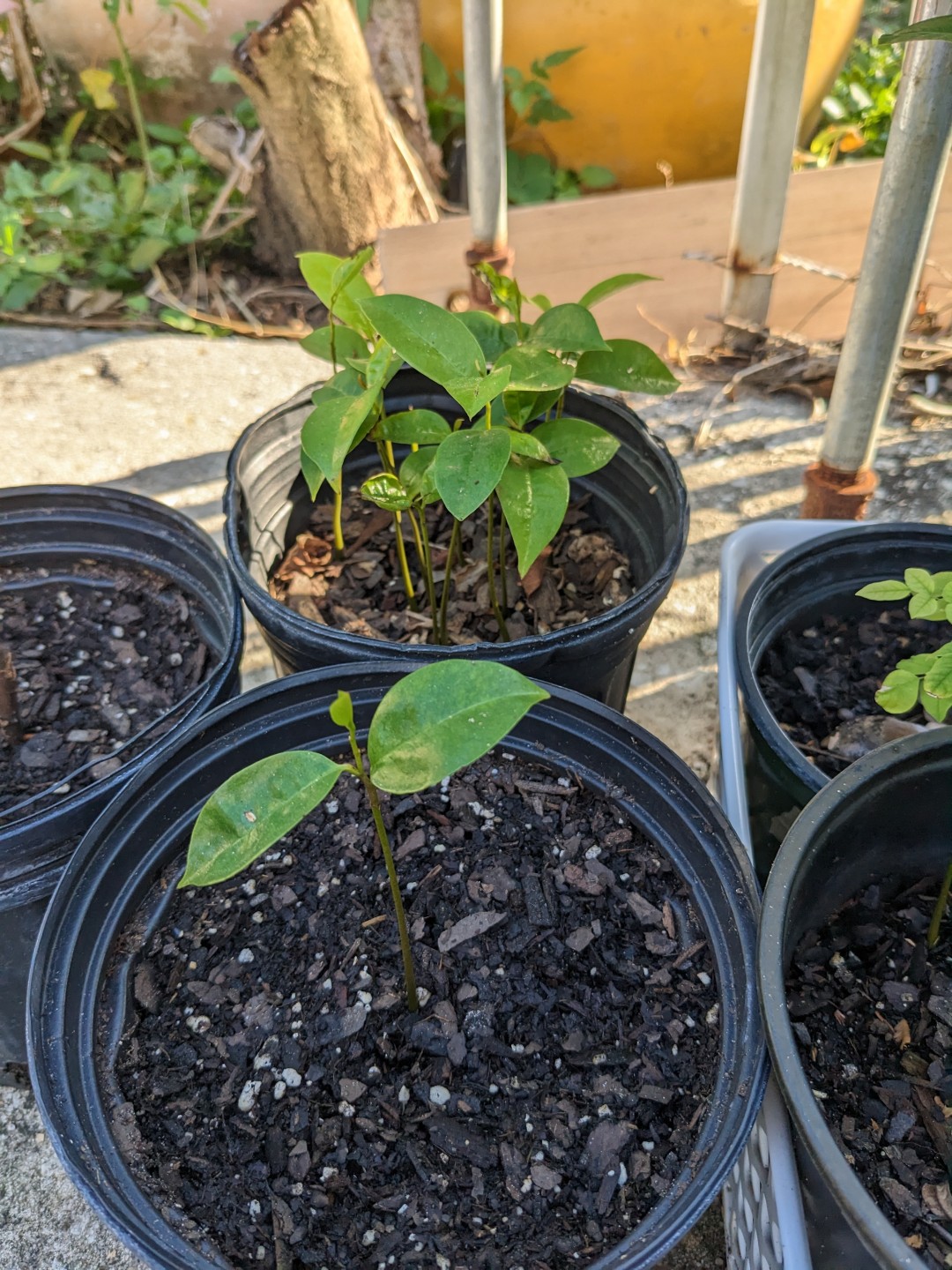
- Strawberries (Fragaria virginiana *)
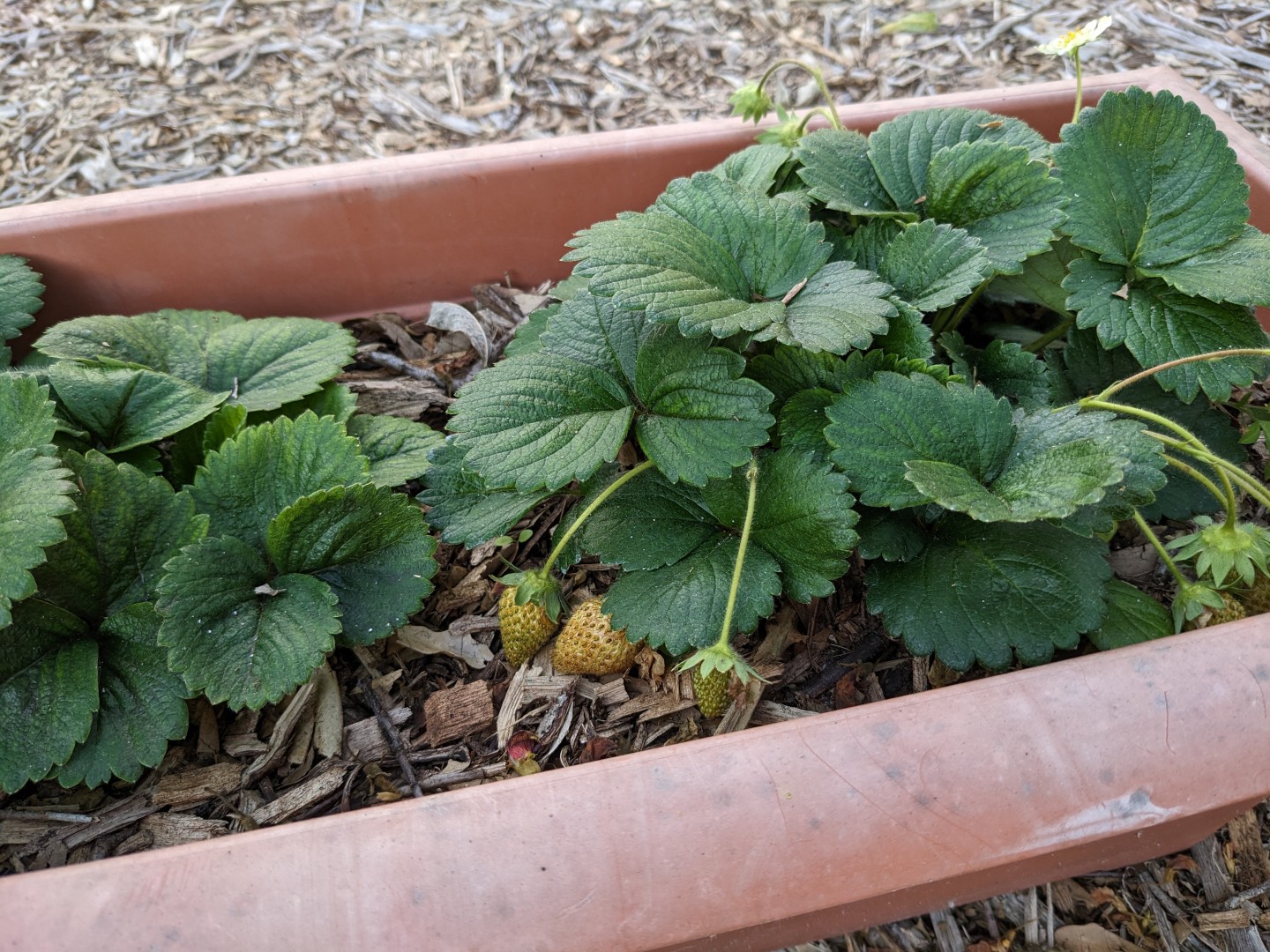
Who doesn't love strawberries? People allergic to them probably but surely not many others. Fresh strawberries are so yummy. Fragaria virginiana is actually native to the extreme northern part of the State I live in but the climate is too warm here for the native species. I tried growing them last year but they didn't last very long and never fruited. I'm growing a hybrid variety now and they have a bunch of strawberries on them currently. We grow strawberries in the winter here because it doesn't frost and the summer sun is too intense for them.
That's good for now. I'm going to try to do some more of these food forest update posts periodically. Cheers!